Standort Stuttgart
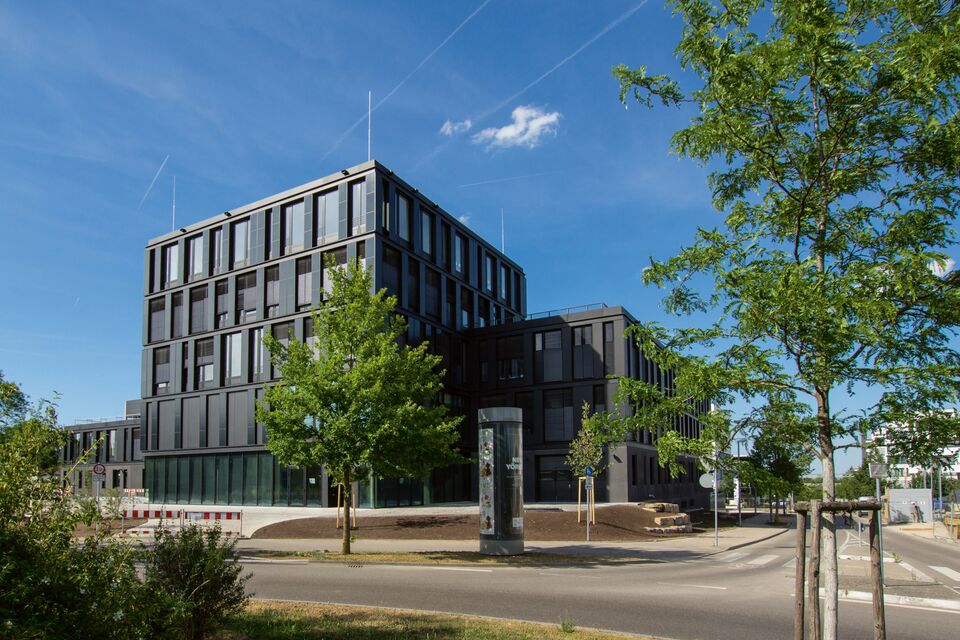
ZSW - Center for Solar Energy and Hydrogen Research Baden-Württemberg
ZSW is one of the leading institutes for applied energy research in Germany. Through its research, it contributes to the transformation of the energy system toward climate neutrality and resource efficiency. The institute combines expertise in natural sciences, engineering, and economics to develop sustainable solutions for the energy supply of tomorrow. In addition to research, ZSW supports industry, politics, and society with scientifically sound analyses and helps to successfully transfer innovations into practice.
ZSW Stuttgart
Prof. Dr. Frithjof Staiß
Meitnerstraße 1
70563 Stuttgart
Tel. 0711 7870-0
ZSW Ulm
Prof. Dr. Markus Hölzle
Lise-Meitner-Str. 24
89081 Ulm
Tel. 0731 9530-0
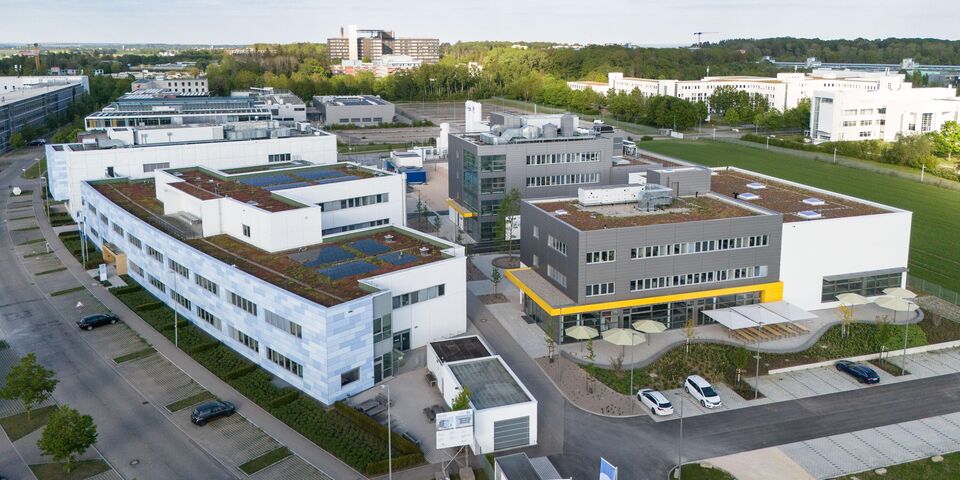
Standort Ulm
Core Competencies
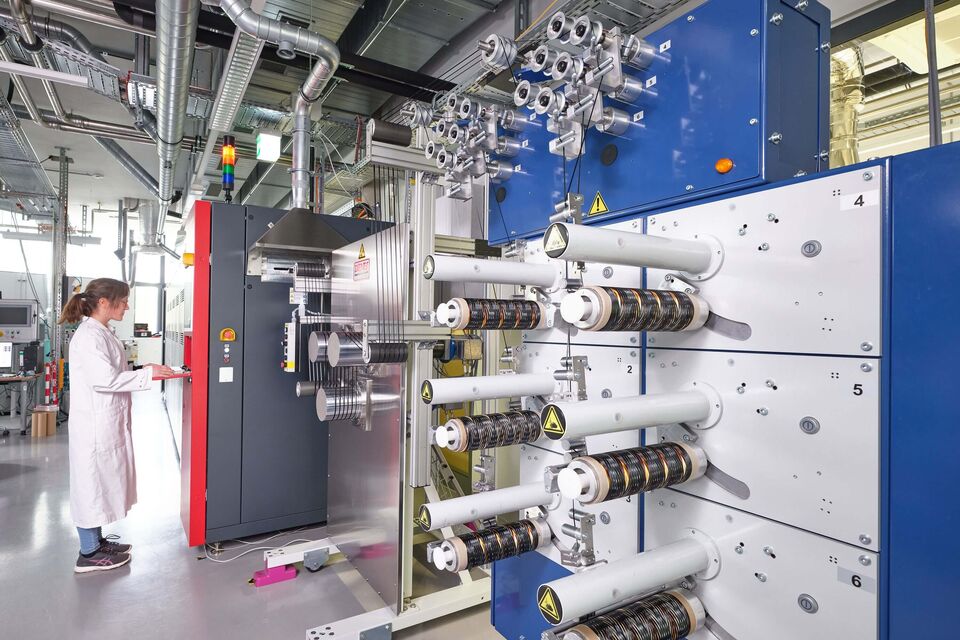
The ZSW's competencies lie in the research and development of sustainable energy technologies. The central fields of work and expertise include in particular:
- Photovoltaics research & development
- Hydrogen technology
- Batteries (lithium-ion & post-lithium)
- Fuel cell development & manufacturing
- Renewable fuels & process engineering
- Modeling & simulation
- Grid integration of renewable energies & smart grids
- Energy economic system analysis
Business Fields
As an industry-oriented research institute, the ZSW accompanies the transfer of new technologies into industrial application. All steps along the value chain, from materials research to market introduction, are covered.
- Renewable energy supply (focus on wind and solar)
- Technology transfer & scale-up (fuel cell technology HyFaB, cathode pilot plant PowderUp!, FPL research platform for large lithium-ion cells, perovskite pilot line)
- Emissions-free mobility & transport (aviation, commercial vehicles, passenger cars, and maritime applications)
- Energy infrastructure & grids (hybrid power plants, grid-friendly storage, smart grids)
- Hydrogen economy (infrastructure development, alkaline, PEM, and AEM electrolysis technologies)
- Climate & resource protection (recycling and circular economy)
- AI applications for optimizing energy systems
- Policy & system consulting
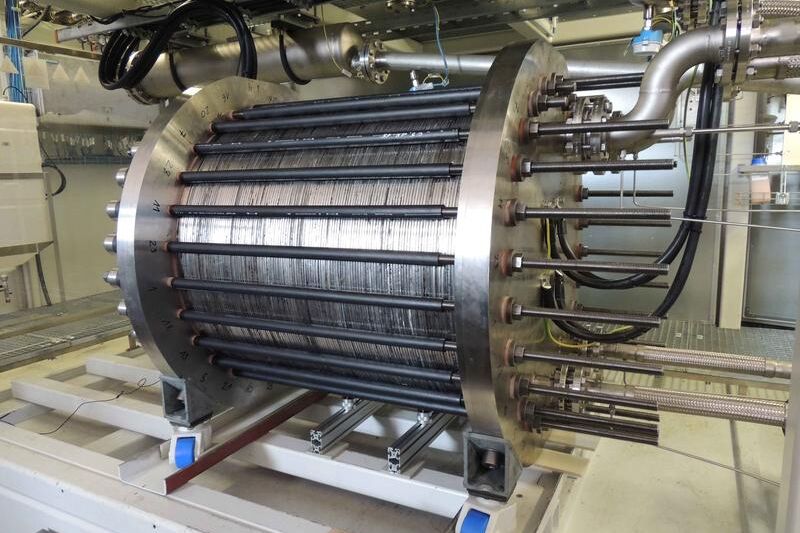
"Electrolysis made in Baden-Württemberg"
The ZSW is setting new impulses for climate-neutral hydrogen production with "Electrolysis made in Baden-Württemberg." By establishing a modular electrolyzer demonstrator in the megawatt range and developing innovative key technologies, the ZSW is creating the foundation for scalable, efficient, and competitive hydrogen systems. Together with partners from research and industry, the ZSW strengthens Baden-Württemberg as a hub for innovation and accelerates the transfer of cutting-edge hydrogen technologies into industrial applications.
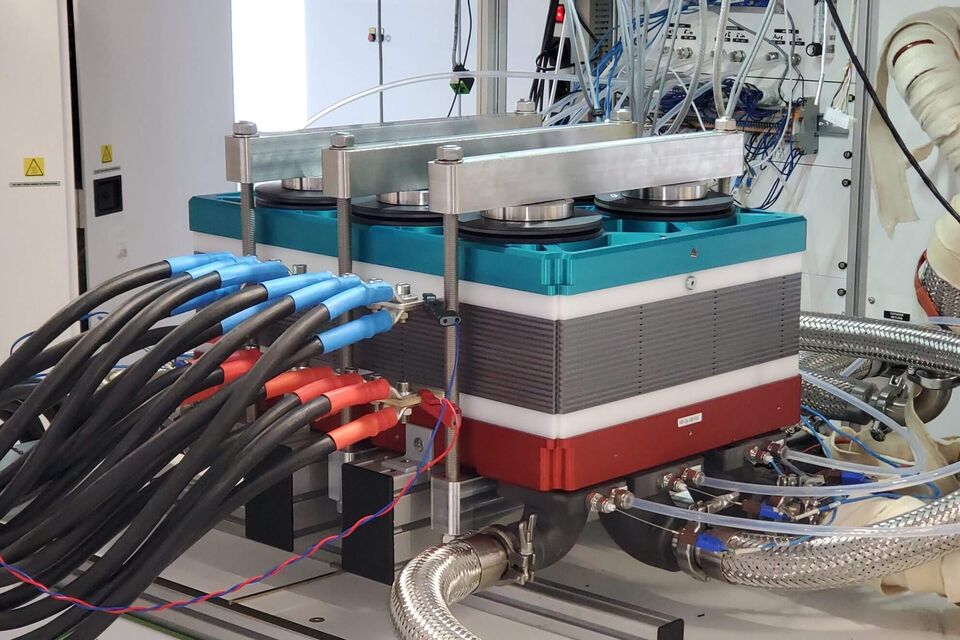
World's largest PEM fuel cell stack
Driving ships over long distances in an emission-free and efficient manner is a central step for the maritime energy transition. The **Center for Solar Energy and Hydrogen Research Baden-Württemberg (ZSW)** has developed a large-format **PEM fuel cell stack** specifically designed for maritime and stationary applications, powered by hydrogen. With an active area of **1,300 square centimeters per cell**, the stack can achieve up to **500 kilowatts of total power per stack**. Initial performance and sensitivity tests were successfully conducted at the in-house fuel cell test center in Ulm. The measurement results confirmed the previously simulated performance data of the stack and underscore the technological maturity of the demonstrator.
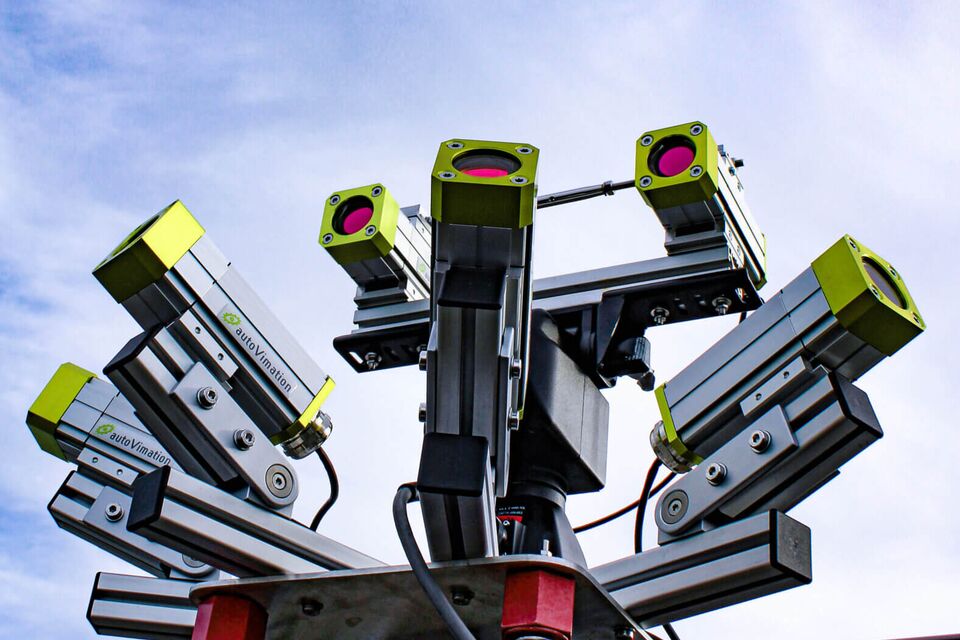
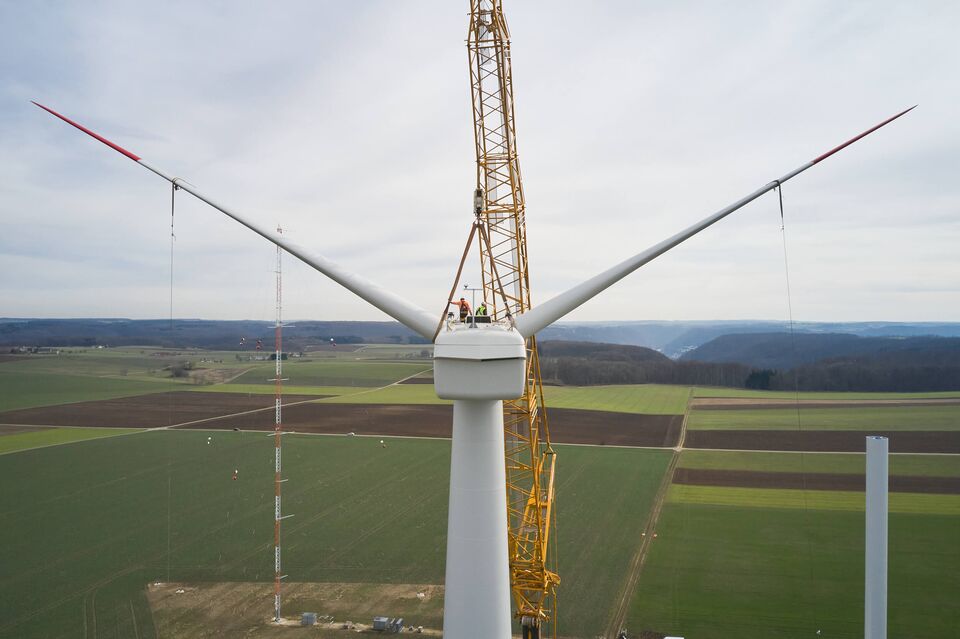
Smart species protection for wind energy
How can the energy transition and species protection be successfully combined? With the **BirdRecorder**, the ZSW demonstrates a promising approach. The AI-based technology detects birds in the vicinity of wind turbines in real time, analyzes their flight behavior, and enables demand-based shutdowns. With its expertise in artificial intelligence and the evaluation of millions of image data, the ZSW creates innovative solutions for a nature-compatible expansion of wind energy, thereby strengthening the acceptance of renewable energies.